



Lead poisoning symptoms at the shooting range: what to watch for

Lead exposure from shooting rarely announces itself. In adult shooters it usually builds over weeks or months and shows up as fatigue, headaches, irritability or a metallic taste, all easy to blame on something else. This guide describes the signs shooters most often overlook, how lead follows you home, and what to do if any of it sounds familiar.
Key takeaways
- In adults, the signs of lead exposure build gradually and look a lot like stress, short sleep or getting older.
- Symptoms cannot tell you your exposure level. A blood lead test, arranged through your doctor, is the only reliable way to know.
- Lead dust leaves the range on your skin, hair, clothes, shoes and range bag. Children are far more susceptible to it than adults.
- Range ventilation, strict hygiene, lower-emission ammunition and respiratory protection all reduce how much lead you take in.
How lead gets into a shooter's body
Two routes matter most at the range.
Breathing it in. With standard primers, each trigger pull releases lead styphnate as a microscopic vapor, and friction between the bullet and the barrel adds a fine metallic mist. Inhaled lead passes from the lungs into the bloodstream, which makes this the most direct route of exposure. In poorly ventilated lanes the particles stay suspended long after the shooting stops, so you keep breathing them during breaks. For more detail, see what is in the air at an indoor range.
Hand to mouth. Lead residue settles on every surface at the range, including your skin, hair and gear. Eating, drinking, smoking or handling your phone during a session carries that dust to your mouth, and your digestive system absorbs it. Hands that look clean after a session are not necessarily clean.
Casting your own bullets is a separate, high-risk case. Melting lead produces fumes, and without serious ventilation the person pouring breathes concentrated particles.
Symptoms of lead exposure in adult shooters
Recreational shooters rarely get sick overnight. Lead accumulates with repeated exposure, and the first signs tend to be vague. None of the signs below proves that lead is the cause, because they resemble plenty of everyday complaints. Treat them as a reason to talk to your doctor, not as a way to diagnose yourself.
Mood, focus and sleep
- Irritability or mood swings with no clear cause, where small annoyances become hard to handle
- Trouble concentrating on complex tasks, mental fog, memory lapses
- Insomnia or waking up often during the night
Fatigue, headaches and a metallic taste
- Persistent fatigue that a full night's sleep does not fix
- Frequent, dull headaches that do not respond to the usual remedies
- A metallic taste in the mouth, which can appear when the lead level in your blood rises sharply
- Muscle and joint pain
- Constipation or abdominal cramps, often blamed on diet
Signs linked to longer exposure
- Numbness or loss of sensation in the hands and feet, a sign that the nervous system is affected
- High blood pressure
- General weakness, or getting short of breath faster during exertion. Lead disrupts the production of heme, the molecule red blood cells need to carry oxygen, and that can lead to anemia.
- Effects on libido and fertility, including lower sperm count
The kidneys deserve a separate mention. Lead causes inflammation and damage in the tubules that filter your blood, and that damage often stays silent until it is advanced and irreversible.
Why these signs are easy to miss
The delay is the problem. Symptoms arrive weeks or months into repeated exposure, so the link to the range is hard to make. Most shooters put the first signs down to stress, age or a long day on the firing line.
Feeling fine does not settle it either. The absence of symptoms does not mean the absence of exposure, and by the time symptoms are obvious, the physical impact is often already significant.
Your body also keeps a reserve. Lead is stored in bone for decades and can be released back into the blood long after exposure ends. The effects are cumulative and can persist after the exposure stops.
Lead you carry home
Range safety does not end in the parking lot. Lead dust clings to shoes, clothing, hair and range bags. At home it ends up on carpets, floors and furniture, where your family can touch it or breathe it in.
Why children are the main concern
Children are significantly more susceptible to lead than adults. Their developing brains absorb it faster, and even low levels of exposure can cause lasting harm. In children, exposure may show up as developmental delays, learning difficulties, a sudden drop in attention or school performance, abdominal pain, loss of appetite or behavior changes. If you shoot regularly and have young children at home, raise it with their doctor.
Pregnancy calls for the same caution. Lead crosses the placenta, and exposure during pregnancy raises the risk of premature birth and miscarriage. If you are pregnant or planning a pregnancy, talk to your doctor about your range time.
Keep range lead out of the house
- Take off your range shoes before you go inside.
- Change clothes right away and wash range clothing separately from the family laundry.
- Do not clean guns on the kitchen table. Use a dedicated mat you can throw away or wipe down, and decontaminate the area afterward.
- Store your range bag in the garage or in a closed container, not in a bedroom or living area.
The full routine is in our guide to decontamination after the range.
What to do if this sounds familiar
Talk to your doctor and get tested
If you shoot regularly and recognize several of these signs, see your doctor. Say plainly that you shoot, how often, and whether it is indoors. A blood lead test is the only reliable way to know your exposure level. There is no truly safe level of lead in the blood, so even a result considered low is a reason to review your shooting and hygiene habits.
As a general guide, recreational shooters should consider a test at least once a year. Professionals and regular competitors may need one every three to six months. Our guide to blood lead testing for shooters covers how to ask for the test and what the numbers mean.
Cut your exposure at the range
- Pick ranges with real ventilation. At a well-designed indoor range you should feel a slight airflow from behind you, pushing fumes toward the targets. Stagnant air, or fumes that hang in the lanes, is a bad sign. Outdoor ranges are often the safer option.
- Keep food, drinks and cigarettes away from the firing line.
- Wash up before you leave. Wash your hands and face with cold water and a lead-removal soap. Regular soap does not always remove heavy metals effectively.
- Choose lower-emission ammunition. Lead-free primers greatly reduce the cloud produced at the shot. TMJ (total metal jacket) bullets fully enclose the lead base, unlike standard FMJ. More in our article on lead-free ammunition.
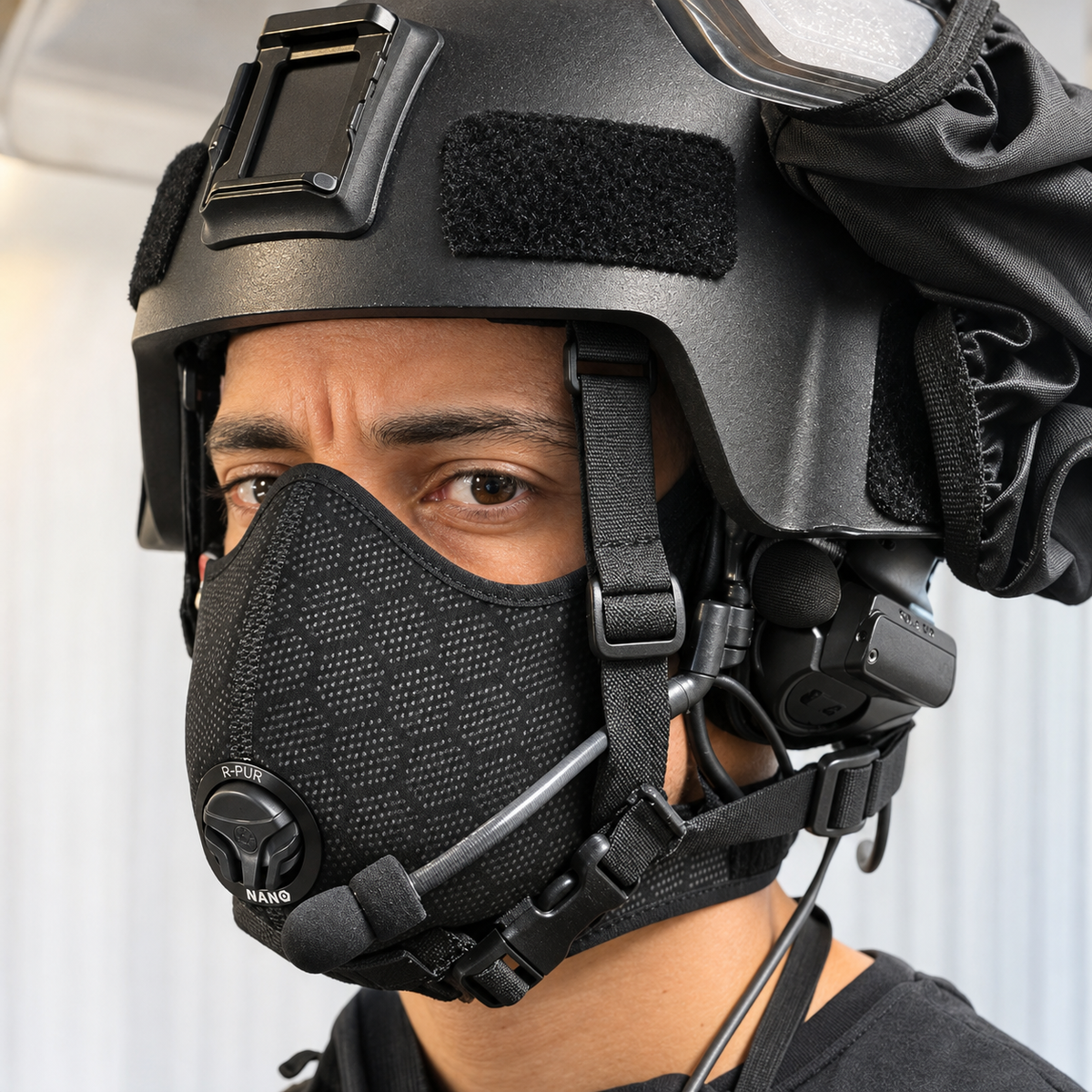
- Protect your airway. A filtering mask reduces what you breathe in at the firing line. The NANO® Range Mask is one option: it filters particles down to 50 nanometers (PM0.05) with FFP3-certified filtration (the highest European class, equivalent to NIOSH N100), and its activated carbon layer reduces gunpowder gases and odors. It does not replace range ventilation or hygiene.
FAQ
What are the first signs of lead exposure from shooting?
They are usually non-specific: persistent fatigue, recurring headaches, irritability, trouble concentrating, or a metallic taste in the mouth. They tend to appear gradually after repeated exposure and resemble stress or tiredness, which is why they get overlooked. Your doctor is the one to sort out the cause.
Can I have elevated lead and feel fine?
Yes. Symptoms are not a dependable gauge of exposure, and some damage, such as kidney damage, can stay silent for a long time. A blood lead test is the only reliable way to know where you stand.
Can I bring lead dust home without knowing it?
Yes. Microscopic dust clings to skin, hair, shoes and range bags, and without decontamination it can end up on carpets, furniture and other household surfaces. Change clothes and wash up before contact with your family, especially young children.
How do I know if an indoor range is well ventilated?
You should feel air moving from behind the firing line toward the targets, carrying fumes away from you. If the air seems still or fumes linger in the lanes, ventilation is probably insufficient. HEPA filtration is another good indicator.
If you want to reduce what you inhale at the firing line, respiratory protection is the part you control directly.
Sources
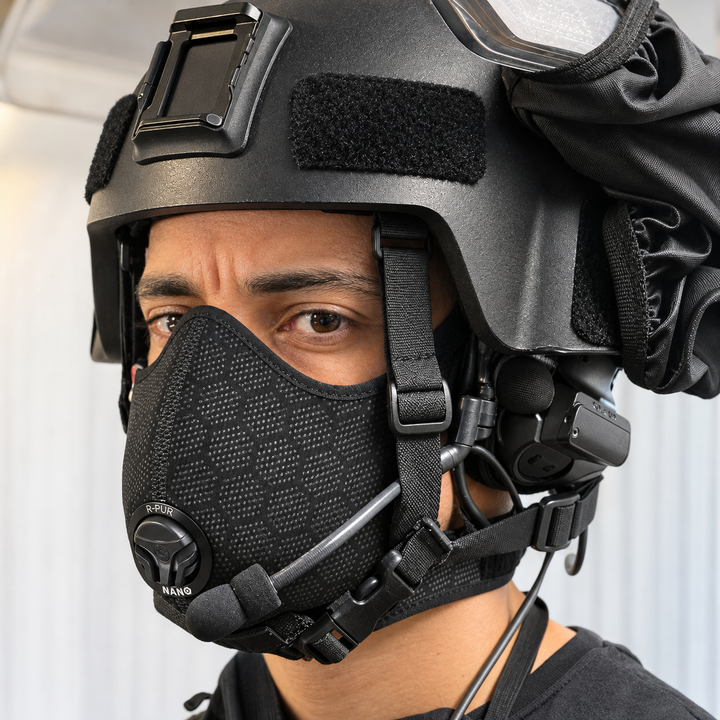
NANO® Range Mask
The shooting mask that filters particles down to 50 nanometers.
From $179 $199
This article is general information for shooters, not medical advice. If you think you have been exposed to lead, talk to your doctor.
Keep reading



Built for the firing line
NANO® Range Mask
Filters particles down to 50 nanometers, with an activated carbon layer for gunpowder gases and replaceable filters.
From $179 $199
