


Blood lead test for shooters: when to get one and how to read it

A blood lead test is the only way to know where you stand with lead, because exposure at the range usually causes no obvious symptoms until your blood lead level (BLL) is already elevated. This guide covers when to ask your doctor for the test, how to ask, what the numbers mean, and how often to retest.
Key takeaways
- If you shoot indoors or more than once a month, a blood lead test once a year is the minimum. Weekly or high-volume shooters should test every 6 months.
- The reference value CDC and NIOSH cite is 3.5 µg/dL. A result above it is higher than most adults' and calls for finding the source. It is not a safety threshold.
- Overt symptoms usually begin above 40 µg/dL, but kidney, cardiovascular and cognitive effects are documented from 10 µg/dL. Feeling fine is not a test result.
- The test is a simple venous blood draw arranged through your doctor, with results in a few days.
Why you cannot go by symptoms
At the range you inhale the fine particles and metallic vapors released with every shot, and you swallow the dust that settles on your hands, face and clothing. Indoor ranges concentrate that exposure. Studies of recreational shooters at indoor facilities have found BLLs significantly above the reference value in people who shoot only a few times a month and report no symptoms at all.
Many people with significantly elevated BLLs report no symptoms at all, and the symptoms that do appear overlap with dozens of other conditions. Lead poisoning is diagnosed with a blood test, not from how you feel. For what exposure can feel like, read our guide to the symptoms of lead poisoning in shooters.
When to get a blood lead test
Do not wait for symptoms to become severe. Talk to your doctor about a BLL test if any of these apply:
- You shoot indoors more than once a month and have never been tested.
- You shoot regularly and have persistent fatigue, recurring headaches, abdominal pain, mood changes, or numbness in your hands or feet.
- You are pregnant or planning a pregnancy and have any shooting range exposure.
- You work as an RSO, instructor or firearms trainer. If the range is your workplace, ask your employer what medical surveillance applies to you under OSHA's lead standard.
- A previous test came back at or above 3.5 µg/dL.
How to ask for the test
Start with your primary care physician. Tell them explicitly that you shoot at a range, how often, and whether it is indoors or outdoors, then ask directly for a blood lead level test. Lead exposure is often missed or attributed to something else, so bring up the range yourself.
What to expect:
- A venous blood draw from the arm, analyzed by a certified laboratory.
- A BLL result, typically within 2 to 5 days.
- A clinical evaluation. Your doctor reviews the result together with your symptoms and exposure history.
- Further tests if the result is elevated, such as kidney function, a complete blood count to check for anemia, and a neurological assessment.
For long-term exposure, bone lead (which can remain for decades) is estimated separately by X-ray fluorescence.
Who to see beyond your primary care physician
- An occupational medicine specialist: if your BLL is above 10 µg/dL or your exposure is occupational.
- A medical toxicologist or poison control center: above 40 µg/dL, or if chelation is being considered.
What the numbers mean
The reference value: 3.5 µg/dL
The blood lead reference value cited by CDC and NIOSH is 3.5 µg/dL. It marks the 97.5th percentile nationwide, so a result above it is higher than almost everyone's and warrants a search for the source. NIOSH's adult surveillance program counts 5 µg/dL and above as elevated. Neither number is a safety threshold.
There is no confirmed safe level of lead in blood. Subtle cardiovascular and neurological effects have been associated with BLLs below 3.5 µg/dL.
OSHA thresholds for workers
OSHA's lead standard (29 CFR 1910.1025) sets an airborne action level of 30 µg/m³ over 8 hours, above which medical surveillance becomes mandatory for workers. In blood lead terms, OSHA requires monitoring every 2 months and written notification at 40 µg/dL, and medical removal from lead-exposed work at 50 µg/dL (construction) or 60 µg/dL (general industry).
These are workplace rules, and a recreational shooter should not read them as comfort levels. According to OSHA's lead health effects guidance, chronic exposures producing BLLs as low as 10 µg/dL are associated with impaired kidney function and elevated blood pressure.
Reading your result
Use this table to prepare the conversation with your doctor, not to replace it.
| Blood lead level | Symptoms typically described | Next step |
|---|---|---|
| Below 3.5 µg/dL | None expected | Keep up your current hygiene. Retest annually. |
| 3.5 to 10 µg/dL | Usually none, possibly subtle fatigue | Look for the source. Improve hygiene and respiratory protection. Retest in 3 to 6 months. |
| 10 to 20 µg/dL | Fatigue, mild headaches, subclinical kidney and cardiovascular effects | See a doctor. Reduce exposure and switch to jacketed or lead-free ammo. Retest every 3 months. |
| 20 to 40 µg/dL | Fatigue, headaches, mood changes, GI discomfort, joint pain, sleep issues | See an occupational medicine physician or toxicologist. Reduce or pause shooting. Retest every 1 to 2 months. |
| 40 to 60 µg/dL | Overt symptoms: headache, fatigue, abdominal pain, constipation, neuropathy | Seek urgent medical evaluation and stop lead-exposed activities. Your physician will assess whether chelation is indicated. |
| Above 60 µg/dL | Severe: convulsions, coma risk, anemia, severe cramping | Medical emergency. Seek immediate care. |
How often to retest
- Indoors, or more than once a month: once a year is the minimum.
- Weekly or high-volume shooting: every 6 months.
- RSOs, instructors and trainers under occupational medical surveillance: every 6 months, and every 2 months above 40 µg/dL.
- After an elevated result: sooner, following the intervals in the table and your doctor's advice.
If your BLL is elevated, the most important step is eliminating or reducing the exposure, which can mean pausing shooting until the level comes down. Regular testing confirms it is falling.
Chelation, a drug treatment that binds circulating lead so it can be excreted, is not routine for mildly elevated BLLs. According to Mayo Clinic's treatment guidance, it may be indicated for adults with high blood lead levels or significant symptoms. It carries its own risks and must be discussed with a qualified physician, never self-administered.
Keeping your number down between tests
A test tells you where you stand. These controls, in order of effectiveness, are what move the number.
- Ventilation. Choose ranges with dedicated mechanical ventilation that moves air from behind the shooter downrange. A powder smell that lingers is a sign of inadequate airflow.
- Ammunition. Fully jacketed bullets (FMJ, TMJ) reduce lead vaporization, lead-free primers remove a major source of airborne lead, and lead-free ammunition is the lowest-exposure option.
- Respiratory protection. A respirator reduces what you inhale, however well the range is ventilated. Look for P100-level filtration, and remember that fit matters as much as the rating: a mask that does not seal leaks around the edges. Our guide to choosing a respirator for the range goes deeper. The NANO® Range Mask is one option, with FFP3-certified filtration (the highest European class, equivalent to NIOSH N100) of particles down to 50 nanometers (PM0.05) and replaceable filters. No mask replaces ventilation, hygiene or, if the range is your workplace, your employer's respiratory protection program.
- Hygiene. Wash your hands and face with cold water and soap right after shooting, before you touch your phone or food. Never eat, drink or smoke at or near the firing line. Change clothes before leaving and wash range clothing separately. The full routine is in our decontamination guide.
FAQ
How often should a regular shooter get a blood lead test?
If you shoot indoors or more than once a month, once a year is the minimum. Weekly or high-volume shooters should move to every 6 months. After an elevated result, your doctor may set shorter intervals.
At what blood lead level do symptoms start?
Overt symptoms such as headache, fatigue, sleep disturbance, joint pain and constipation typically begin above 40 µg/dL. Subclinical effects on the kidneys, cardiovascular system and cognition are documented at BLLs as low as 10 µg/dL, which is why the 3.5 µg/dL reference value prompts action well before symptoms appear.
Does shooting outdoors eliminate the risk?
No. The risk is significantly lower than indoors because natural airflow disperses lead particles, but lead still settles on your hands, clothing and equipment. Washing your hands right after shooting matters outdoors too.
A test measures your exposure. What you breathe at the firing line is something you can change before the next one.
Sources
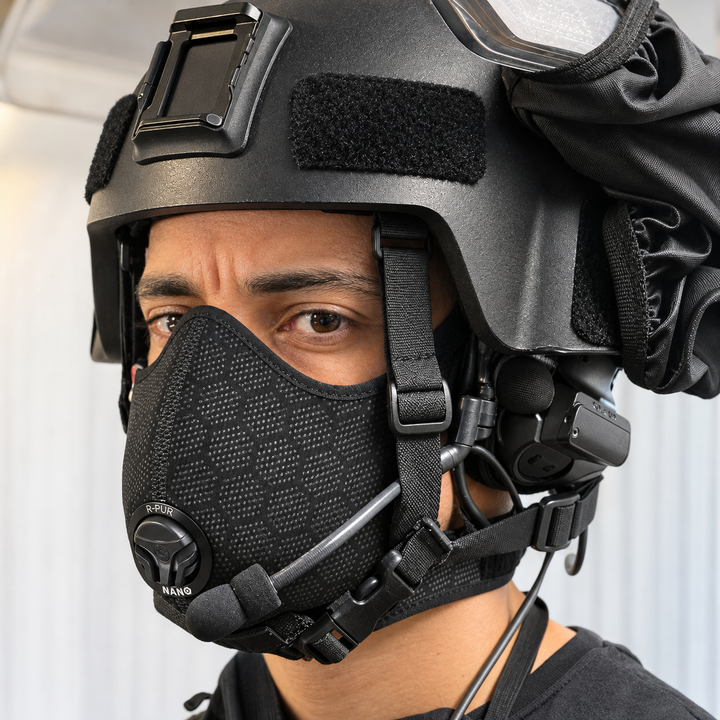
NANO® Range Mask
The shooting mask that filters particles down to 50 nanometers.
From $179 $199
This article is general information for shooters, not medical advice. If you think you have been exposed to lead, talk to your doctor.
Keep reading


Built for the firing line
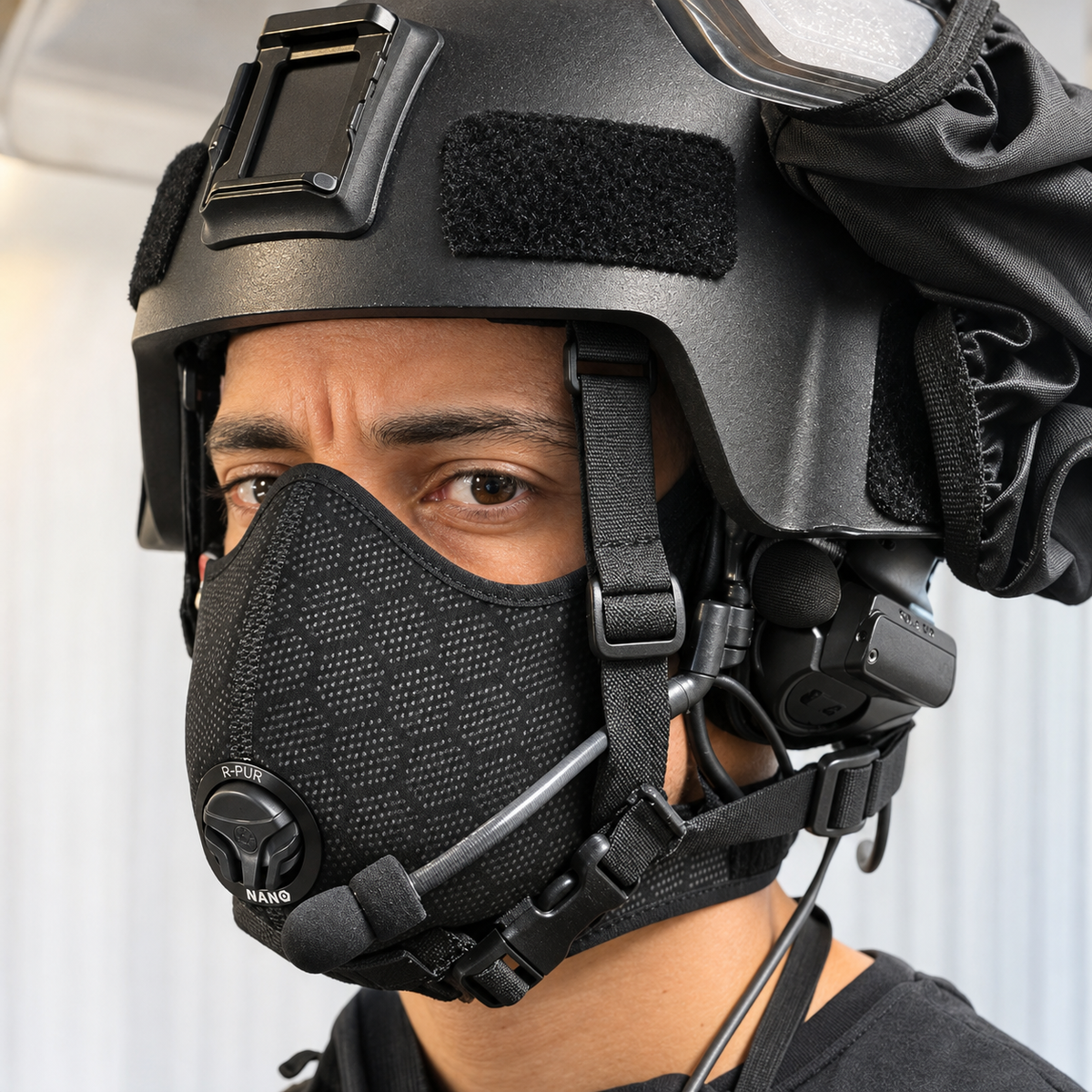
NANO® Range Mask
Filters particles down to 50 nanometers, with an activated carbon layer for gunpowder gases and replaceable filters.
From $179 $199
