
Shooting range decontamination: a step-by-step lead routine

Lead dust from a range session leaves with you: on your hands, in your hair, in your shirt and on your range bag. A fixed decontamination routine, run in the same order every time, keeps it out of your car and your home. Here it is in three stages: at the range, at the car and at home.
Key takeaways
- Fine lead particles under 1 micron can stay in still indoor air for several hours, so you are exposed between shots too.
- Skin, hair, clothes, shoes and gear all carry residue after a session, not just your hands.
- Order matters: clean your hands and face before you touch your phone, keys or steering wheel.
- At home, shower and shampoo before you sit down or eat, and wash range clothes separately.
Why lead dust does not stay at the range
Contamination starts when the primer ignites. Lead particles from primer combustion are typically 0.1 to 2 microns across, smaller than a red blood cell. A 2023 study in Nature Scientific Reports found that during indoor shooting, lead is concentrated in particles from 100 to 2,000 nm, and that particles of this size are absorbed up to 95% when inhaled.
Particles under 1 micron can hang in still indoor air for several hours. Larger ones (1 to 10 microns) settle within minutes to an hour, depending on ventilation, and they land on everything in reach, including you. (More on what is in the air at an indoor range.) From there, lead has three routes:
- Inhalation during the session, the primary route.
- Hand-to-mouth ingestion afterward: touching your face or handling food before you wash.
- Take-home contamination: residue on clothing, skin, hair and gear that transfers to your car, your home and your family.
Take-home lead is an exposure pathway documented by the CDC. Children of range workers and instructors show measurably higher blood lead levels than children of non-exposed workers, and a developing nervous system is more sensitive to lead at lower doses.
Step 1: At the range, before you leave the building
This stage decides how much lead travels with you. Do not rush it.
- Take off and bag your range clothes. Do not drag a contaminated shirt across your face. Roll it inward, dirty side in, and seal it in a plastic bag (double-bag after heavy shooting, brass handling or bullet trap work), apart from your everyday belongings. After high-exposure work, change completely at the range if it has a changing area.
- Wipe exposed skin before you touch anything. Use lead-removal wipes (D-Lead or an equivalent) on your hands, face, neck, nostrils and under your fingernails, before you pick up your phone or keys.
- Wash at the range sink. Use a lead-specific soap. Regular soap lifts surface contamination but does not chemically bind (chelate) the metallic residue in skin folds and under nails. Scrub under the fingernails, between the fingers and up to the wrists, rinse with cold water, and dry with a disposable paper towel, not a shared towel.
Step 2: At the car
Your range bag, gun case and accessories sat in the same air you did. Do not let them contaminate the vehicle.
- Wipe down your gear. Wipe the outside of your range bag, gun case, ear protection and shooting glasses with a damp cloth or a lead wipe before they go in the car. Wipe your phone too. It spent the session on the bench.
- Deal with your shoes. Range-only footwear goes into a sealed bag in the trunk. At a minimum, wipe the soles before you get in. Most shooters overlook them.
- Change, or cover the seat. If you could not change at the range, keep clean clothes in the car and change before you drive. If you drive in range clothes, cover the seat with a washable cover or a dedicated towel. Fabric seats absorb lead residue and are hard to decontaminate.
- Wipe the touch points after every trip. The steering wheel, shifter and door handles get touched constantly and carry residue into the house.
Step 3: At home
Do not sit down yet.
- Shower and shampoo right away. Before the couch, before you hug anyone, and before you eat or drink. Lead settles in hair and transfers easily to pillows, upholstery and people close to you. Use a washcloth on your face, neck and ears.
- Wash range clothes on their own. Never with the household laundry, and never with children's clothing. Add an extra rinse and use a phosphate-based detergent or one sold for lead removal. If your family shares the machine, wipe or rinse the drum afterward.
- Clean your gear. Clean firearms in a well-ventilated space, ideally outdoors, with gloves on, and throw used cleaning rags away in a closed bag. Wipe the inside of your range bag, your ear protection and your glasses with a damp cloth. If you also reload, the bench needs its own lead routine.
- Clean floors the right way. Never dry sweep or use compressed air. Both put lead dust back into the air you breathe. Use a HEPA-filter vacuum on floors, car seats and any fabric your range bag touched, then damp mop hard floors. A regular vacuum recirculates fine particles through its exhaust.
- Keep gear away from the family. Store it in the garage or a closed container, not in the entryway or living room, and wash your hands before any contact with a child.
Where a respirator fits
Decontamination handles what lands on you, not what you inhale during the session, which is the primary route. That part is the job of range ventilation and, if you choose to wear one, a respirator rated for sub-micron particles (N100, P100 or FFP3). Keep it on for the whole session, because fine particles stay in the air between strings. See our guide to choosing a respirator for the range.
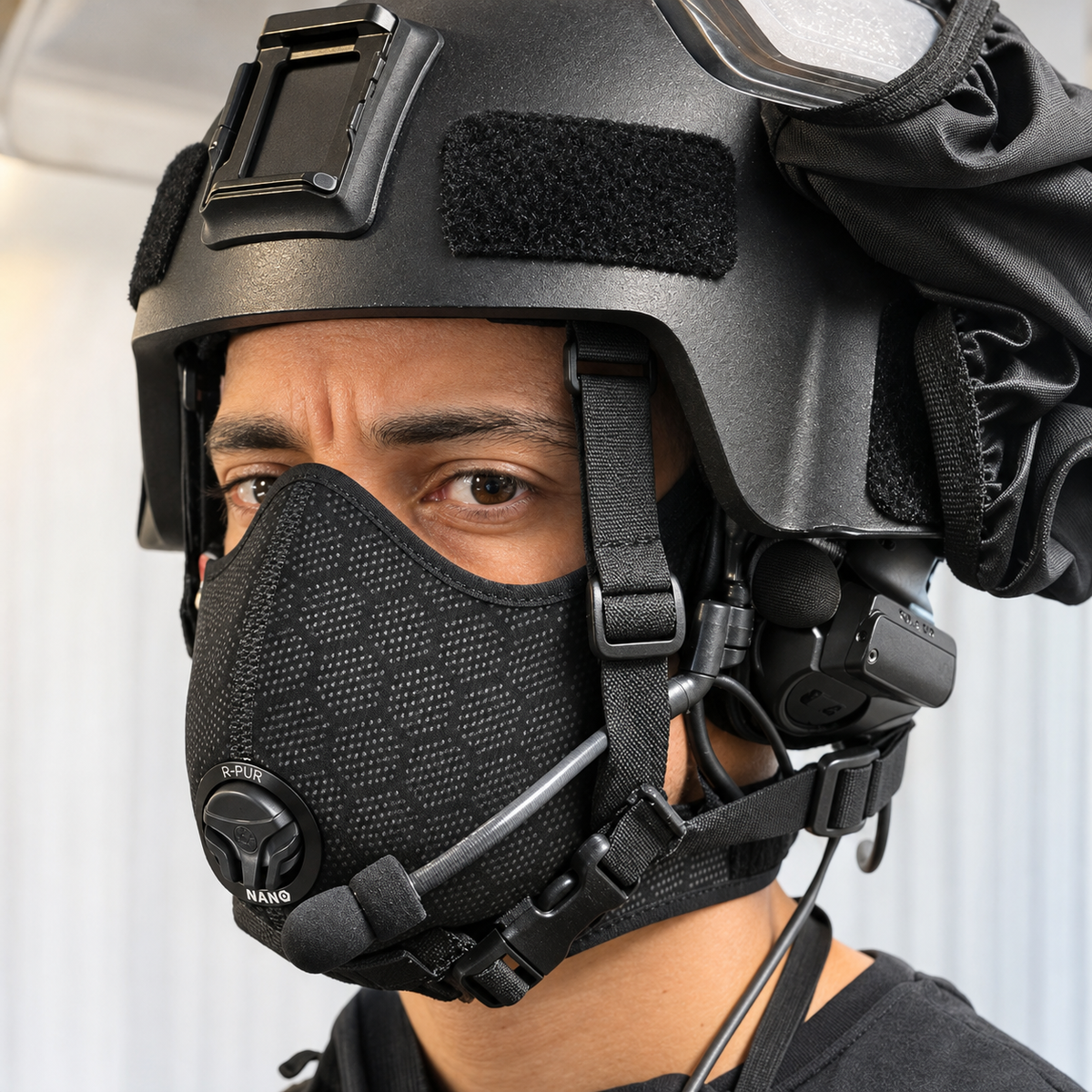
One option is the NANO® Range Mask. It offers FFP3-certified filtration (the highest European class, equivalent to NIOSH N100), filters particles down to 50 nanometers, has an activated carbon layer that reduces gunpowder gases and odors, and takes replaceable filters. A mask reduces what you breathe in. It does not replace range ventilation or the routine above.
FAQ
How long does lead dust stay in the air at an indoor range?
Particles under 1 micron can stay suspended for several hours in still indoor air. Those from 1 to 10 microns settle within minutes to an hour, depending on ventilation.
Does regular soap remove lead from skin?
Only partly. It lifts surface contamination but does not chelate metallic residue in skin folds and under nails. Use a lead-specific soap.
How often should I run the full routine?
After every session, whatever its length or round count. If you shoot often and want to know where you stand, talk to your doctor about a blood lead test.
If you want respiratory protection made for the firing line, the Nano Range is one option.
Sources
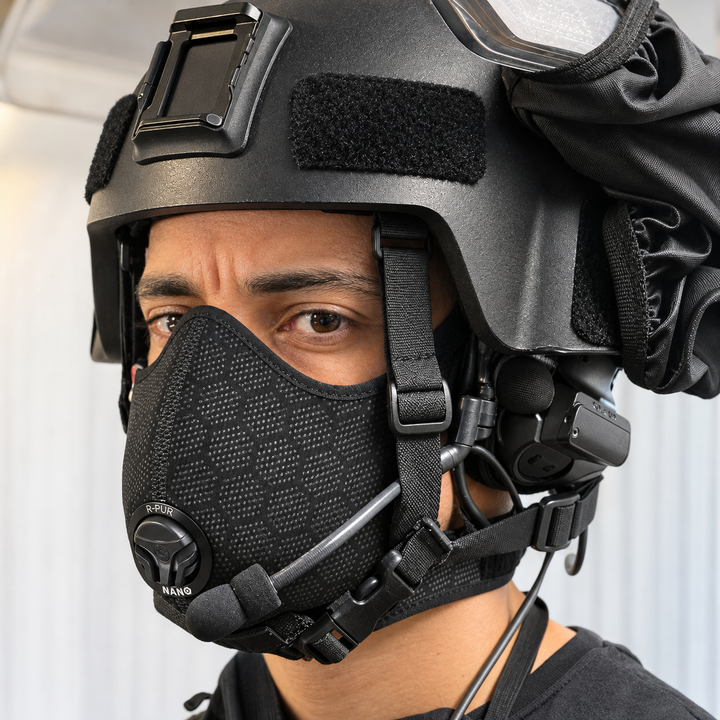
NANO® Range Mask
The shooting mask that filters particles down to 50 nanometers.
From $179 $199
This article is general information for shooters, not medical advice. If you think you have been exposed to lead, talk to your doctor.
Keep reading


Built for the firing line
NANO® Range Mask
Filters particles down to 50 nanometers, with an activated carbon layer for gunpowder gases and replaceable filters.
From $179 $199
