
Lead exposure when reloading ammunition: how to prevent it

Reloading exposes you to lead in two ways: fumes and fine dust you breathe at the bench, and residue that travels from your hands to your mouth. You control both with ventilation, wet cleaning methods, the right protective gear and a strict wash-up routine. A periodic blood lead test, ordered by your doctor, tells you whether it is working.
Key takeaways
- Lead gets into your body two ways at the bench: inhaling fumes and dust, and hand-to-mouth transfer.
- Casting is the most aggressive exposure in the whole process. It calls for active extraction and an N100 or P100 respirator.
- Wet tumbling traps residue in liquid. A dry vibratory tumbler releases dust when you open the lid.
- No eating, drinking or smoking at the bench. Wash with a lead-removal soap and launder shop clothes separately.
- Get a baseline blood lead test through your doctor, then recheck every six months if you reload actively.
Where the lead comes from on the reloading bench
Casting fumes
Lead melts at 327°C (about 621°F). A hot pot gives off fumes you cannot see or smell, and they are easy to inhale when you lean over it. The heat generates sub-micron particles that get past the body's natural filters, reach the deepest part of the lungs and pass into the bloodstream. The hotter the pot, the more it gives off.
Because there is no odor, most hobbyists underestimate this. The fumes settle quickly, but they stay in your breathing zone long enough to do damage.
Dust on your hands, tools and bench
Lead dust is heavy and it clings. It settles on your skin, your tools and the bench top, and it stays wherever you put your hands. Spent primers leave tiny fragments of lead styphnate around the priming station and on the floor.
From there the route is hand to mouth. Eating or drinking while you handle components is the fastest way to swallow it, because a single touch transfers dust to food. Smoking adds another route: the heat of a cigarette can vaporize lead carried on your fingers. A quick rinse with plain water does not remove the film, so without the right cleaning products it ends up in your next meal.
Set up the workspace to keep dust out of the air
The layout of your reloading room decides how much dust stays airborne. Three choices do most of the work.
Ventilation for casting and assembly
An open window is not enough. Passive airflow often just swirls dust around you, and cross-ventilation helps without solving the problem. Active extraction does better, and placement matters: put the fan behind the pot so it pulls fumes away from you, not into a swirl in front of your face. For a serious casting setup, a dedicated hood or a high-CFM fan is the standard.
Case cleaning: wet, dry or ultrasonic
How you clean brass decides how much lead goes airborne. Wet tumbling uses liquid to trap lead salts and primer residue, which makes it the cleanest method for indoor use. A vibratory tumbler generates a lot of dry dust, and opening the lid releases it into the room. That can contaminate the whole space, which matters most in a basement that is part of your home.
| Cleaning method | Lead dust risk | Where residue goes | Best suited to |
|---|---|---|---|
| Wet tumbling | Low | Held in liquid | Indoor use |
| Vibratory (dry) | High | Into the air | A separate workshop |
| Ultrasonic | Low | Held in liquid | Precision work |
Bench cleanup
- Never use compressed air on your press. It blows lead particles straight into your breathing zone.
- Do not dry sweep, and do not use a regular vacuum. Both spread lead dust around instead of containing it.
- Wipe the press and the bench with damp paper towels after every session. They trap deposits without scattering them. Give the priming station extra attention.
Protective gear for the bench
Even in a well-ventilated room, you need personal protection to keep lead off you and to avoid carrying it out of the workspace.
- Nitrile gloves whenever you handle raw lead or dirty brass. They are cheap and they keep residue off your skin. Change them regularly, and never touch your phone or your face with a used pair.
- A dedicated apron or shop coat that keeps dust off your clothes.
- Eye protection against flying dust.
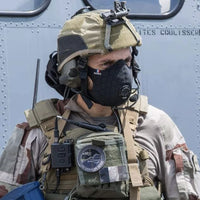
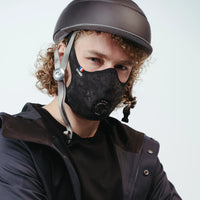
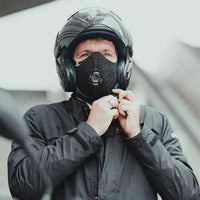
- A respirator. A surgical mask offers no protection against metal fumes. For casting, wear an N100 or P100 respirator. For reloading in general, N100 or FFP3 filtration is the minimum.
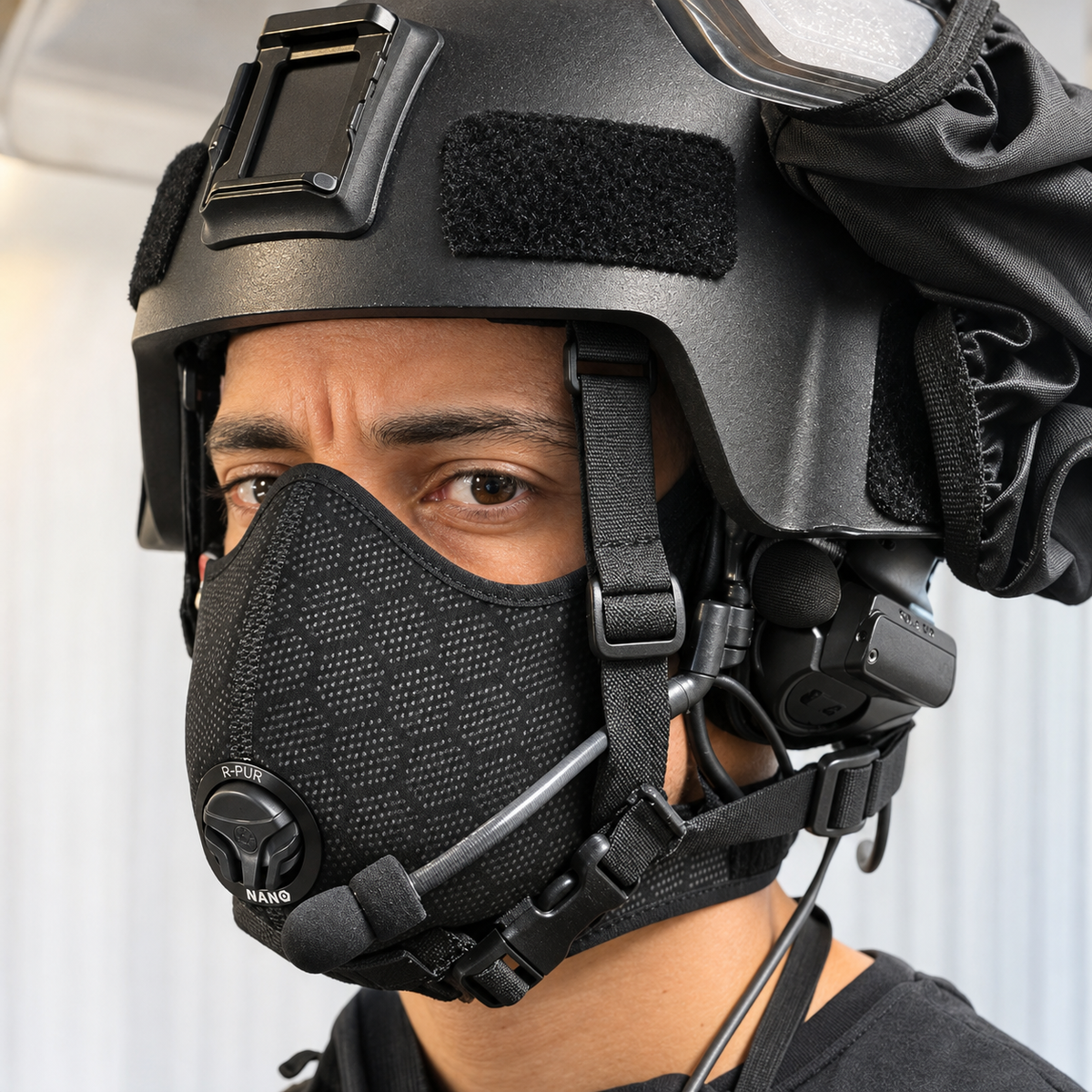
One option is the NANO® Range Mask. It offers FFP3-certified filtration (the highest European class, equivalent to NIOSH N100), its internationally patented nanofiltration captures particles down to 50 nanometers (PM0.05), an activated carbon layer reduces gunpowder gases and odors, and the filters are replaceable. Like any mask, it reduces what you breathe in. It does not replace ventilation or clean habits at the bench. If you are comparing options, our guide to choosing a respirator for the range covers the filter classes.
Hygiene: hands, clothes and the washing machine
Washing up
Ordinary soap often falls short, because lead binds to the oils on your skin. Use a lead-removal soap with chelating agents, which break that bond. Start with cold water, not hot, and keep lead-removal wipes at the bench if there is no sink nearby. Wash before you eat, drink, smoke or touch your face.
The sequence in our decontamination routine after the range works just as well after a session at the press.
Laundry
- Never wash shop clothes with the family laundry. Lead dust can transfer to sheets or to your children's clothes.
- Run them in a dedicated cycle with a detergent made to neutralize lead.
- Then run an empty cycle with a cleaning product to clear the drum before the next family load.
When to check your blood lead
Gear and good habits are necessary, but the only objective proof that they are working is a lab result. The test is a blood lead level (BLL), ordered by your doctor and reported in micrograms of lead per deciliter of blood (µg/dL).
- Baseline: get tested before you start reloading.
- Follow-up: if you reload actively, recheck every six months. Regular checks catch a failure in your routine early.
- Symptoms: unexplained fatigue, a metallic taste in the mouth, joint pain and irritability can be signs of lead exposure. If you notice them, talk to your doctor without waiting for the next scheduled test.
Our guides to blood lead testing for shooters and the symptoms of lead poisoning go into more detail.
Do not count on home remedies. Drinking milk or eating cilantro will not flush lead out of your bones, and believing it will only delays proper care. Lead mimics calcium and is stored deep in bone, where its half-life is measured in decades. Removing a significant lead burden takes medical chelation therapy, and that decision belongs to your doctor. Prevention is the part you control.
FAQ
Is a surgical mask enough for casting bullets?
No. A surgical mask offers no protection against metal fumes. Casting calls for an N100 or P100 respirator, used together with active extraction, not instead of it.
Is wet tumbling safer than a vibratory tumbler?
For lead dust, yes. Wet tumbling holds lead salts and primer residue in liquid. A dry vibratory tumbler creates dust that escapes when you open the lid, so it belongs in a separate workshop, not in your living space.
Why not use compressed air or a regular vacuum at the bench?
Compressed air throws heavy metal particles into the air, where you can inhale them. Dry sweeping and conventional vacuums spread lead dust instead of containing it. Damp paper towels trap the deposits safely.
How often should reloaders get a blood lead test?
Get a baseline before you start, then test every six months if you reload actively. If symptoms such as unexplained fatigue or a metallic taste appear, talk to your doctor right away.
If you want a mask for the bench and the firing line, the Nano Range is one option to look at.
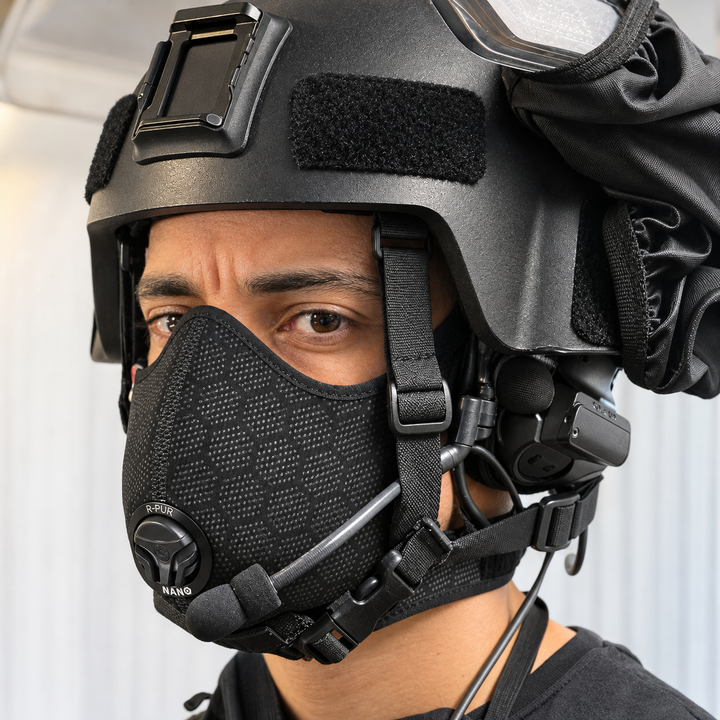
NANO® Range Mask
The shooting mask that filters particles down to 50 nanometers.
From $179 $199
This article is general information for shooters, not medical advice. If you think you have been exposed to lead, talk to your doctor.
Keep reading


Built for the firing line
NANO® Range Mask
Filters particles down to 50 nanometers, with an activated carbon layer for gunpowder gases and replaceable filters.
From $179 $199
