
Best respirator for shooting: P100 guide for range use

The best respirator for shooting is one that filters at the 100 level, seals on your face, and stays on for the whole session with your eye and ear protection in place. For most shooters that means a half-face respirator, with P100 as the safe default filter class. This guide takes the choices in order: filter, format, fit, upkeep.
Key takeaways
- NIOSH recommends a minimum of N100, R100 or P100 for lead exposure, with P100 preferred when oily aerosols may be present. An N95 is not enough for range use.
- A half-face respirator is the practical choice for most shooters. It works with ear muffs, shooting glasses and a cheek weld better than a full-face mask.
- Fit and seal matter as much as the filter rating. Facial hair along the seal line breaks the seal.
- A respirator reduces what you breathe in. It does not replace range ventilation or washing up afterward.
What a range respirator has to handle
Every shot ignites a primer and vaporizes a small amount of lead styphnate, the lead compound in most standard primers. That vapor cools almost instantly into very fine lead particles that stay suspended for minutes to hours. Bullet impact on steel or a backstop adds more. Firing also produces carbon monoxide, nitrogen oxides, fine and ultrafine particulate matter (PM2.5 and smaller), and unburned powder residue. Our article on what is in the air at an indoor range covers each one.
CDC and NIOSH investigations of indoor ranges have repeatedly documented airborne lead above occupational exposure limits, particularly with poor ventilation or high-volume shooting. OSHA's permissible exposure limit for lead is 50 µg/m³ as an 8-hour time-weighted average.
So you need a high-efficiency particulate filter. And because carbon monoxide builds up quickly in enclosed spaces, a respirator is an addition to good range ventilation, never a substitute for it.
Filter class: start at 100
The code on a filter tells you two things. The letter is oil resistance: N is not resistant to oil, R is resistant for a limited time (typically a single shift), and P is strongly resistant. The number is filtration efficiency.
| Filter class | Efficiency | Oil resistance | For range use |
|---|---|---|---|
| N95 | ≥95% | None | Not enough |
| N100 | ≥99.97% | None | Acceptable in dry, oil-free conditions |
| P100 | ≥99.97% | Strong | Best choice |
Why an N95 is not enough
At the range an N95 falls short twice. First, 95% efficiency lets 5 of every 100 particles through, and according to the CDC there is no safe blood lead level. Second, the N means no oil resistance. Combustion byproducts include oily aerosols from unburned powder and lubricants, which degrade N-series filter media and can pull efficiency below the rated level.
N100 or P100
Both reach 99.97%, the highest NIOSH efficiency rating. The difference is oil. N100 is acceptable for lead dust in dry, oil-free conditions. P100 holds its rated efficiency when oily particles are in the air. You cannot always predict what is in the air at a range, and NIOSH recommends P-series filters when oil mist or unknown aerosols may be present. That makes P100 the safe default.
When you buy P100 cartridges, check for NIOSH approval and a stated filter class. Magenta is the standard color code for P100. Some cartridges add an organic vapor (OV) layer, which helps with volatile organic compounds from propellant residue. It has a shorter service life than the particulate filter, so follow the manufacturer's replacement guidance.
For the science behind these classes (particle sizes, the 0.3 micron test), read what actually filters lead dust.
Half-face or full-face
Search for the best gas mask for shooting and you will find CBRN full-face masks designed for chemical warfare agents: heavy, bulky, expensive, and more than a recreational shooter needs.
A full-face respirator covers the eyes and carries a higher assigned protection factor (APF 50, versus APF 10 for a half-face). But it is heavy over a long session, fogs as your breathing rate climbs, is difficult to wear with standard ear muffs, can interfere with your cheek weld on a rifle stock, and costs more.
A half-face respirator with P100 filters covers the nose and mouth, which are the pathways for inhaled lead. It works with over-ear hearing protection and shooting glasses, stays comfortable for a 1 to 2 hour session, leaves more room for a cheek weld, and lets you talk to the RSO. It also costs less, so filters are easier to replace on time.
For most recreational and competitive shooters, the half-face is the right tool, provided it fits correctly. A full-face mask makes sense if eye irritation from combustion gases bothers you, as it does for some high-volume indoor shooters. Even then, a half-face P100 respirator with sealed shooting glasses covers most of the exposure.
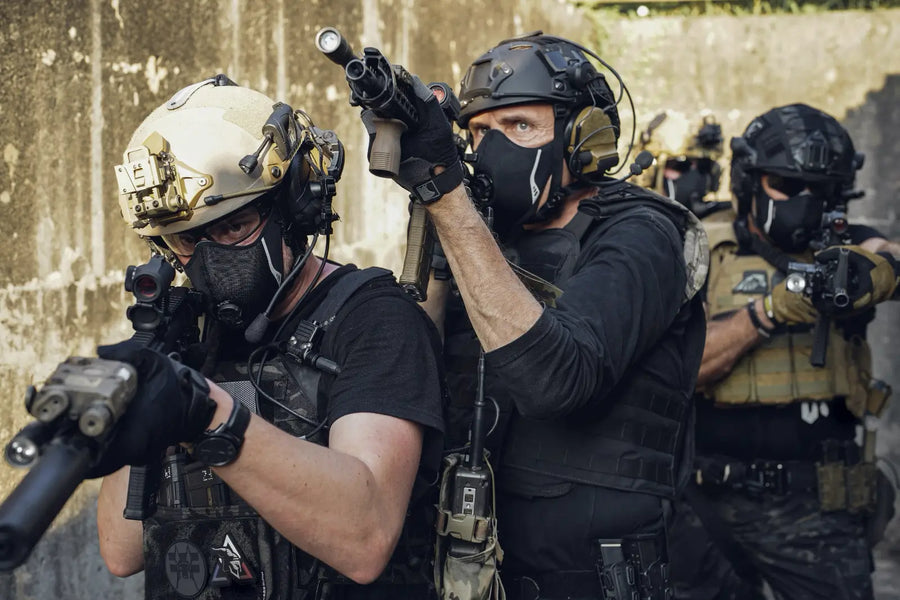
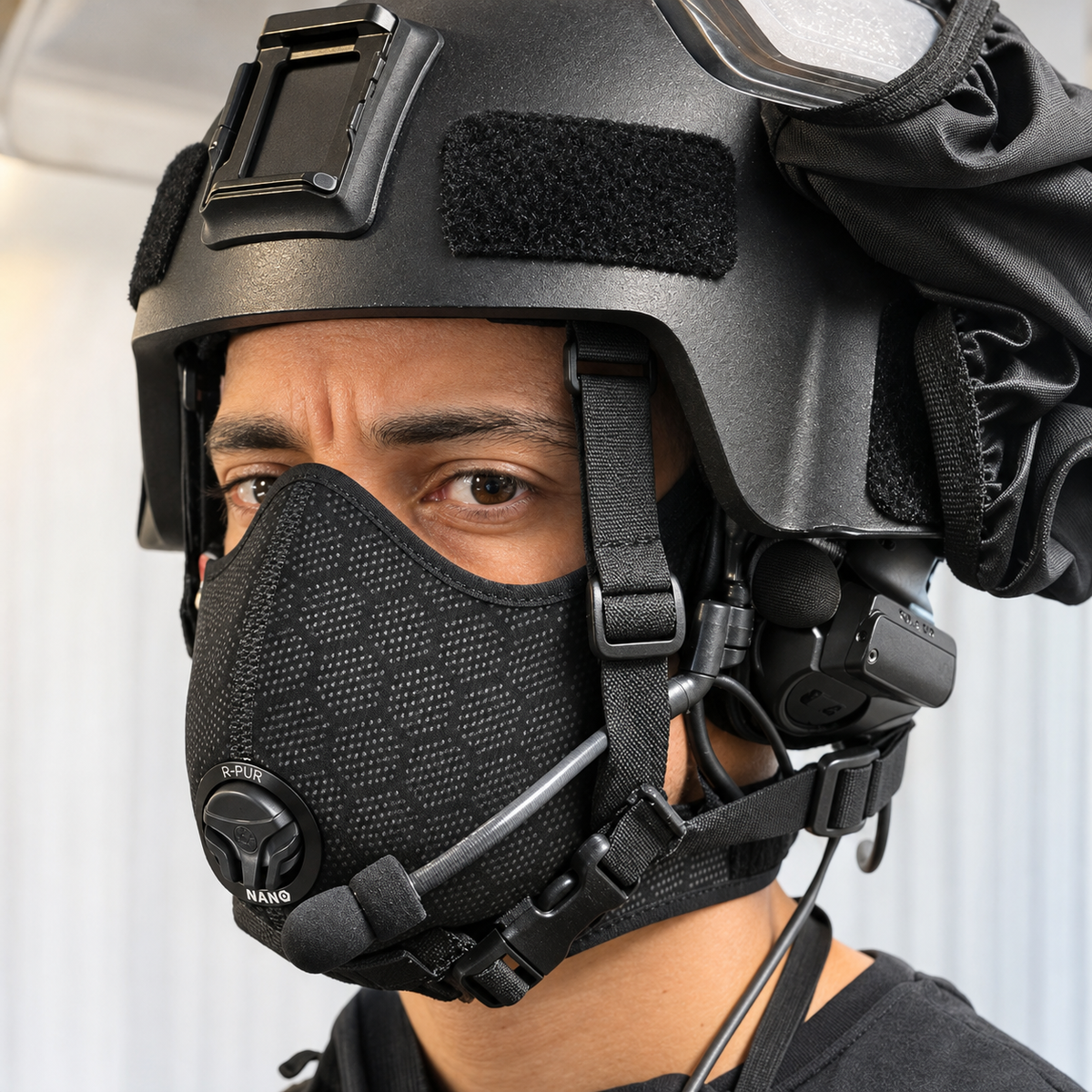
Cartridge respirators are not the only format. Our shooting range mask guide compares all of them side by side. The NANO® Range Mask is a reusable filtering mask for shooters: it filters particles down to 50 nanometers (PM0.05), offers FFP3-certified filtration (the highest European class, equivalent to NIOSH N100) through internationally patented nanofiltration, has an activated carbon layer that reduces gunpowder gases and odors, and takes replaceable filters. Hold it to the same checks as any other mask, starting with fit.
Fit with eye and ear protection
A P100 filter on a poorly fitted mask is not P100 protection. The filter only works if no air gets around the seal.
The seal
Look for an adjustable nose bridge, two straps that hold the seal when you move your head, a silicone or thermoplastic elastomer facepiece (it conforms better than rigid plastic), and more than one size. One-size-fits-all is usually a red flag.
Facial hair along the seal line breaks the seal and reduces protection significantly. No sealing mask is beard-friendly, because the seal needs skin contact.
Ear muffs and glasses
The head straps have to clear your muff cups without breaking either seal. Look for low-profile routing, with straps that sit above and below the ears. Many industrial respirators run a strap straight across the ear, which costs you both hearing and respiratory protection. Then check that the mask body does not push your shooting glasses up or create pressure points that cause fogging.
Breathing resistance
Your breathing rate rises with effort, adrenaline and concentration, and an uncomfortable mask is one you take off. Look for low inhalation resistance, an exhalation valve (it lets exhaled air out and cuts heat buildup), and low weight, which means less jaw fatigue.
Use and upkeep at the range
Before you shoot
- Inspect the facepiece for cracks, tears or deformation in the seal area.
- Check the filters. Replace them when breathing resistance rises noticeably, when they are damaged, wet or contaminated, or when the manufacturer's schedule says so.
- Do a seal check. Cover the exhalation valve and exhale gently: the mask should bulge slightly with no air escaping at the edges. Then cover the inhalation ports and inhale: it should collapse slightly against your face.
- Put on hearing protection and glasses first, then fit the respirator and adjust the straps around the muff cups.
During the session
- Keep the mask on between strings. Lead particles stay airborne for minutes after the shooting stops.
- Do not pull the mask down to talk. Step back from the firing line or use hand signals.
- Avoid touching the front of the mask, where lead particles collect on the filter surface.
Afterward
- Take the mask off last, after you have left the range area, and wash your hands first if you can.
- Store it in a clean bag, away from dust, sunlight and chemical vapors that can degrade filter media.
- Change clothes and shower before contact with family, especially children. Our guide to decontamination after the range has the full routine.
FAQ
Is an N95 enough for a shooting range?
No. An N95 filters 95% of airborne particles and has no oil resistance. NIOSH recommends a minimum of N100, R100 or P100 for lead exposure.
Do I need a respirator at an outdoor range?
The risk is lower than indoors, but wind can push the plume back toward the firing line, and lead dust from bullet impact on steel settles on surfaces and can be stirred up again. If you shoot outdoors regularly, especially at high volume or on steel, a P100 respirator is still worth wearing.
Is a gas mask better than a respirator for shooting?
Not at a standard range. It covers the eyes and has a higher assigned protection factor, but it is heavier, harder to wear with ear muffs, and costs more. A half-face P100 respirator is far more usable.
If a reusable mask with replaceable filters suits the way you shoot, the Nano Range is one option to look at.
Sources
- OSHA: Lead (general industry standard, 29 CFR 1910.1025)
- CDC NIOSH: Lead Exposure at Indoor Firing Ranges
- NIOSH Pocket Guide to Chemical Hazards: Lead
- CDC MMWR: Lead Exposure at Indoor Firing Ranges
- Study: airborne lead at indoor shooting ranges
- Annals of Work Exposures and Health: Lead Exposure at Shooting Ranges
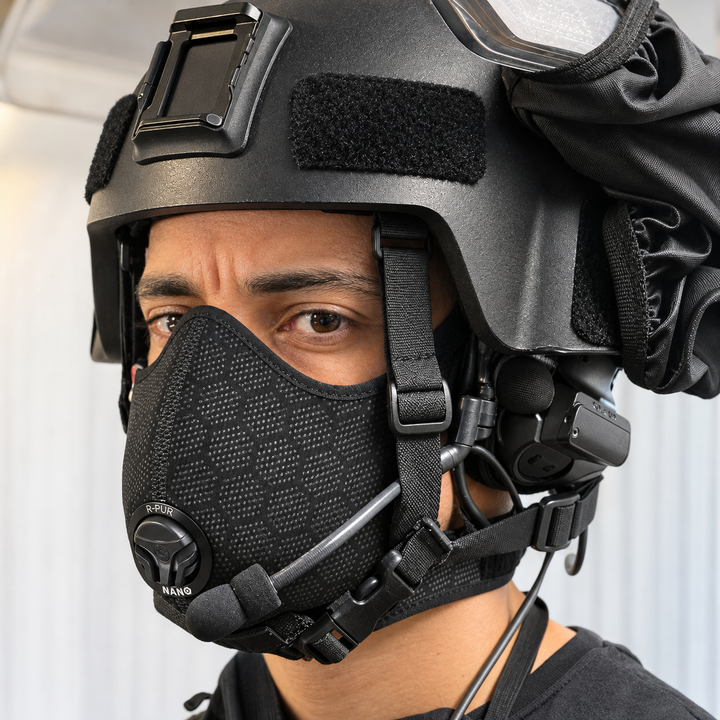
NANO® Range Mask
The shooting mask that filters particles down to 50 nanometers.
From $179 $199
This article is general information for shooters, not medical advice. If you think you have been exposed to lead, talk to your doctor.
Keep reading


Built for the firing line
NANO® Range Mask
Filters particles down to 50 nanometers, with an activated carbon layer for gunpowder gases and replaceable filters.
From $179 $199
