
Can you go shooting while pregnant? Lead, noise and the range

Can you go shooting while pregnant? For live fire, US health guidance points to no. Lead has no known safe level in pregnancy, and gunfire is far louder than the level NIOSH advises pregnant women to stay away from, even with ear protection on. This article explains both risks, what changes between indoor and outdoor ranges, what to do if you have already been, and how a household keeps range lead away from a pregnancy.
Key takeaways
- Lead reaches the baby. The CDC says lead in the blood during pregnancy can raise the risk of miscarriage, cause a baby to be born too early or too small, and harm the baby's brain, kidneys and nervous system.
- Your ear protection does not cover the baby. NIOSH advises avoiding areas louder than 115 dBA during pregnancy even with hearing protection. Gunfire peaks at roughly 140 to 175 dB.
- A mask lowers the lead you breathe in. It does nothing about noise or about lead on hands and clothes, so it does not make range time safe during pregnancy.
- If you have already been to the range, tell your OB-GYN and ask about a blood lead test. One visit is a reason to check, not to panic.
- A partner who shoots can carry lead home on clothes, shoes and hair. A simple routine after the range keeps it out of the house.
Can you shoot guns while pregnant?
No law forbids shooting guns while pregnant, and no study sets a number of rounds that is safe. What exists is guidance on the two exposures every range involves: lead and noise.
On lead, the CDC warns that lead in the blood during pregnancy can harm the baby. The American College of Obstetricians and Gynecologists (ACOG) recommends a blood lead test when a risk assessment finds a source of lead exposure, and regular range time is one to tell your doctor about. On noise, NIOSH tells pregnant workers to keep away from very loud areas whatever they are wearing on their ears.
Put together, the cautious reading is to pause live fire for the length of the pregnancy and to stay out of ranges, indoor ones above all, while other people are shooting. Your OB-GYN or midwife makes the call for your pregnancy. This article is general information, not medical advice.
Why lead matters more in pregnancy
Most primers contain lead styphnate, and most bullets are lead or have an exposed lead base. Each shot puts very fine lead particles into the air. They are breathed in, and they settle on hands, clothes, hair and gear, where they can be swallowed later. Our article on what is in the air at an indoor range covers the detail.
In pregnancy three things change the picture.
- Lead crosses the placenta. NIOSH states that lead can cross the placental barrier, so an unborn child can be exposed to what the mother takes in.
- The effects are on the baby. The CDC lists a higher risk of miscarriage, birth that comes too early or a baby that is too small, harm to the baby's brain, kidneys and nervous system, and learning or behavior problems later in childhood.
- Old lead counts too. Lead is stored in bone for years. The CDC notes that lead stored in an adult's bones can be released into the blood during pregnancy. If you have shot regularly for years, mention it at your first prenatal visit even if you have already stopped.
What the numbers say
NIOSH's blood lead guidance for adults says that, if pregnant, you should not exceed 5 µg/dL. It also reports the National Toxicology Program's conclusion that blood lead levels even lower than 5 µg/dL in pregnant women are linked to reduced fetal growth, and the occupational medicine college ACOEM advises women who are or may become pregnant to avoid lead exposure that would bring their level to 3.5 µg/dL or more.
For comparison, OSHA's workplace rule only requires an employer to remove a worker from lead-exposed work at 50 to 60 µg/dL. Workplace limits were not written with pregnancy in mind, so "the range meets OSHA limits" is not reassurance here.
Noise: your ear protection does not cover the baby
Plugs and muffs protect your own hearing. Sound also travels through the body. NIOSH's page on noise and pregnancy says that exposure to very loud noise during pregnancy can increase the chances of having a baby with hearing problems, that fetuses start responding to sound around the 24th week, and that hearing protection will not fully protect a developing fetus's ears.
Its advice is to avoid areas louder than 115 dBA during pregnancy even while wearing hearing protection, to avoid low-frequency noise you can feel as a rumble or vibration, and to move as far from the source as possible. NIOSH presents the 115 figure as what some experts advise, and the research is limited. Gunfire is not a borderline case, though: peak levels from firearms run from about 140 to 175 dB, and an indoor range reflects that sound off the walls and ceiling.
Can you go to a shooting range while pregnant if you are not shooting?
Standing behind the firing line means breathing the same air and taking the same noise as the shooters. Being a spectator, a scorekeeper or a coach on the line does not remove either exposure.
A lobby or classroom that is closed off from the range, with its own air supply, is a different situation. Ask the range how the space is ventilated and how loud it gets before you rely on it.
Is an outdoor range safer than an indoor one?
It is better on both counts, and neither risk goes away. Outdoors, smoke disperses instead of hanging in the lane, and sound is not reflected back at you. But the muzzle is still an arm's length from your face, wind can push the plume back toward the line, lead still ends up on your hands and gear, and the shot itself is just as loud.
If you will be at a range anyway
If range time is part of your job (law enforcement qualification, instructing, range staff), talk to your employer first about postponing it or doing other duties. NIOSH's advice to pregnant workers is to raise the hazard with the employer and with a doctor.
If you still expect to be at a range, these steps reduce exposure. They do not make it safe.
- Talk to your OB-GYN before you go and ask for a baseline blood lead test.
- Choose outdoors, short and quiet. Few rounds, a slow day, and as much distance from other shooters as the range allows.
- Protect your breathing. Wear a well-fitted mask that filters at the N100 or P100 level, put on before you reach the line. Our respirator guide explains the filter classes and the fit checks.
- Keep hands away from your face. No food, drink or gum on the range. Wash hands and face with soap and water before you leave.
- Leave the dirty jobs to someone else. No sweeping brass, no gun cleaning, no reloading or bullet casting during the pregnancy.
- Do not take it home. Change clothes, bag them, wash them separately and shower when you get in. The full routine is in our decontamination guide.
What you can do instead
Shooting sports do not have to stop for expecting parents. You can keep your skills without the exposure. Dry-fire practice at home, with the usual safety rules and no ammunition in the room, keeps trigger control and sight picture sharp. Laser training cartridges and simulators add feedback. Many shooters use the months of a pregnancy to work on grip, stance and draw with an unloaded gun.
After the birth, two things are worth knowing before you go back. Lead can pass into breast milk, so if you return to shooting while nursing, ask your doctor whether a blood lead test makes sense. And babies and small children absorb lead far more readily than adults, which makes the after-range routine below matter more than ever.
For expecting parents: if your partner shoots
NIOSH warns that people who work around lead can bring lead dust home on clothing, shoes and hair, and that children have been poisoned this way. The same applies to a range bag and a shooting jacket. For a household expecting a baby:
- Change out of range clothes before getting in the car, or as soon as you are home, and wash them in their own load.
- Wash hands and face at the range, and shower before hugs.
- Keep range shoes, bags and guns out of the kitchen and the bedroom.
- Clean guns and reload outside the living space, and never at the kitchen table.
Already been to the range while pregnant?
Many women shoot before they know they are pregnant. A single session does not mean harm has been done. Tell your OB-GYN or midwife what the exposure was (indoor or outdoor, how often, whether you clean guns or reload) and ask for a blood lead test. It is a routine blood draw. NIOSH's guidance is that the level should not exceed 5 µg/dL in pregnancy, and your doctor will decide on any follow-up from the result. Then stay away from further exposure until you have the result and a plan.
FAQ
Is shooting outdoors while pregnant safe?
It is less exposure than indoors, not zero. The lead from your own muzzle and the noise of the shot are still there. The cautious choice is to pause live fire.
Does a suppressor make it okay?
A suppressor makes the shot quieter, but suppressed gunfire is usually still loud enough to need hearing protection, and a suppressor does nothing about lead.
Does a mask make the range safe during pregnancy?
No. A good mask reduces the lead you inhale. It does not reduce noise, and it does not stop lead that gets on your hands, clothes and hair. It is one part of reducing exposure if you cannot avoid being there.
When can I go back to the range?
After the birth, with your doctor's agreement. If you are breastfeeding, ask about a blood lead test, and follow the after-range routine every time.
For the shooters in your household, a filtering mask is one part of keeping lead exposure down, along with washing up and changing clothes.
Sources
- CDC: Lead exposure and pregnancy
- ACOG Committee Opinion 533: Lead screening during pregnancy and lactation
- NIOSH: Blood lead level guidance for adults
- NIOSH: Noise and reproductive health
- NIOSH: Lead in the workplace (placenta, take-home lead)
- Meinke et al., Seminars in Hearing (2017): Prevention of noise-induced hearing loss from recreational firearms
- OSHA lead standard, 29 CFR 1910.1025
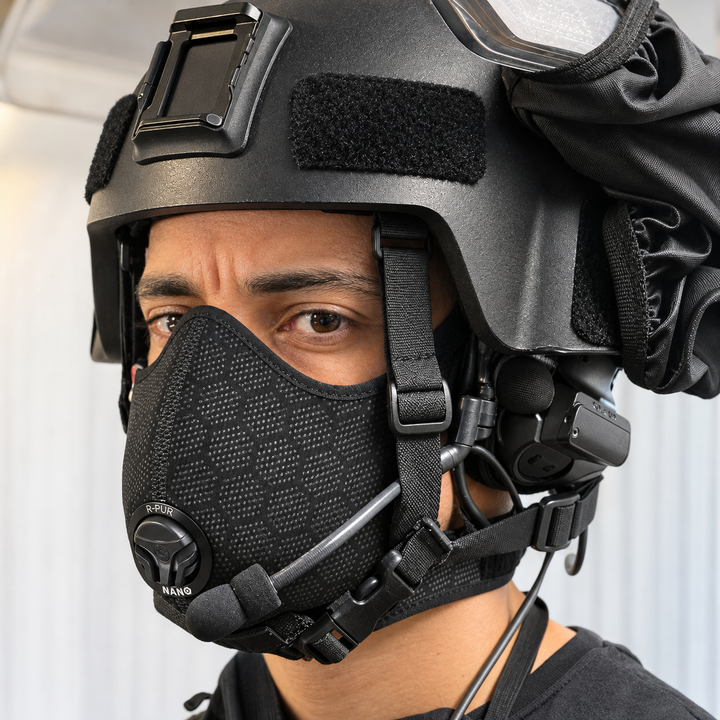
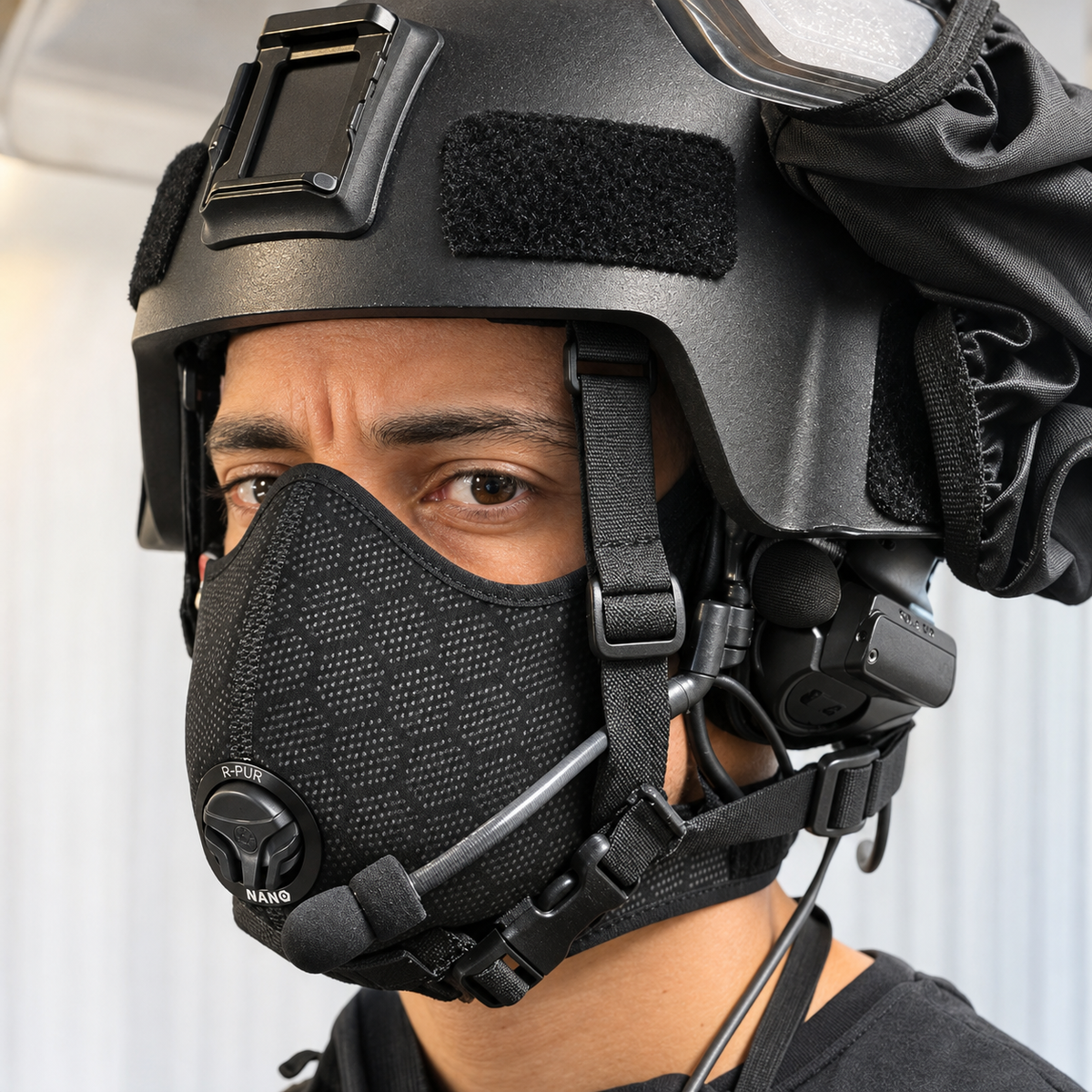
NANO® Range Mask
The shooting mask that filters particles down to 50 nanometers.
From $179 $199
This article is general information for shooters, not medical advice. If you think you have been exposed to lead, talk to your doctor.
Keep reading


Built for the firing line
NANO® Range Mask
Filters particles down to 50 nanometers, with an activated carbon layer for gunpowder gases and replaceable filters.
From $179 $199
